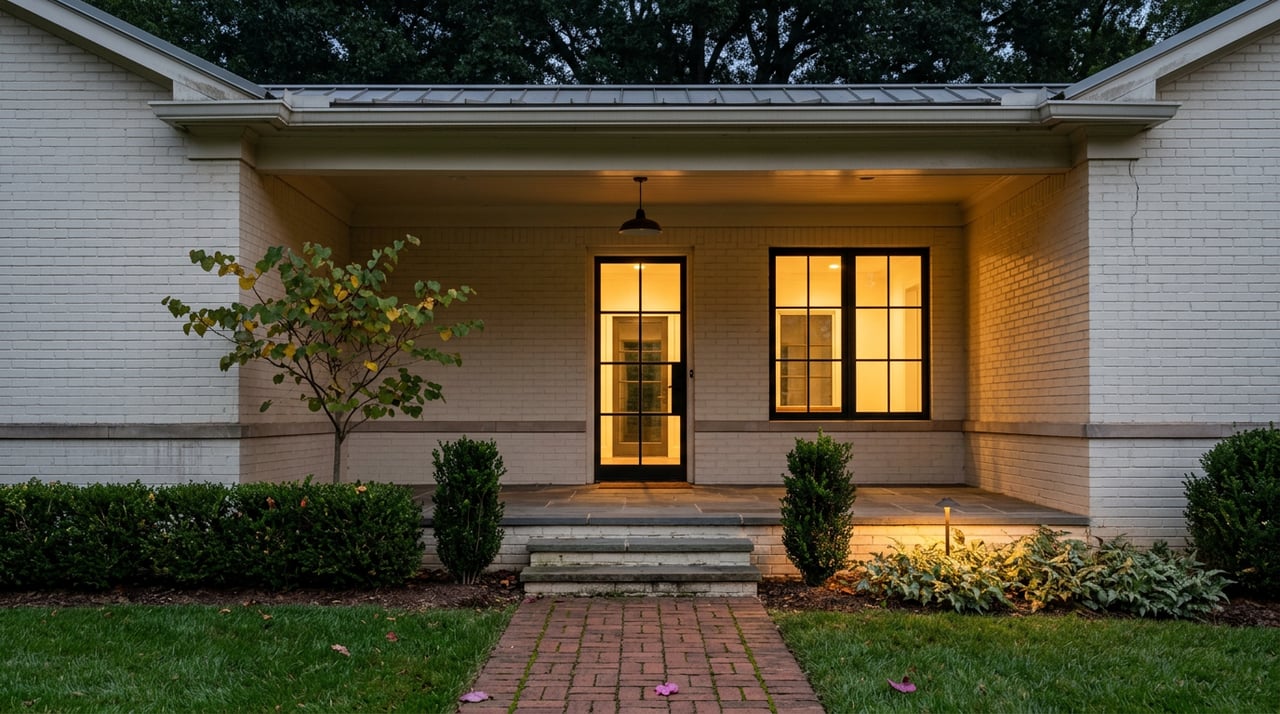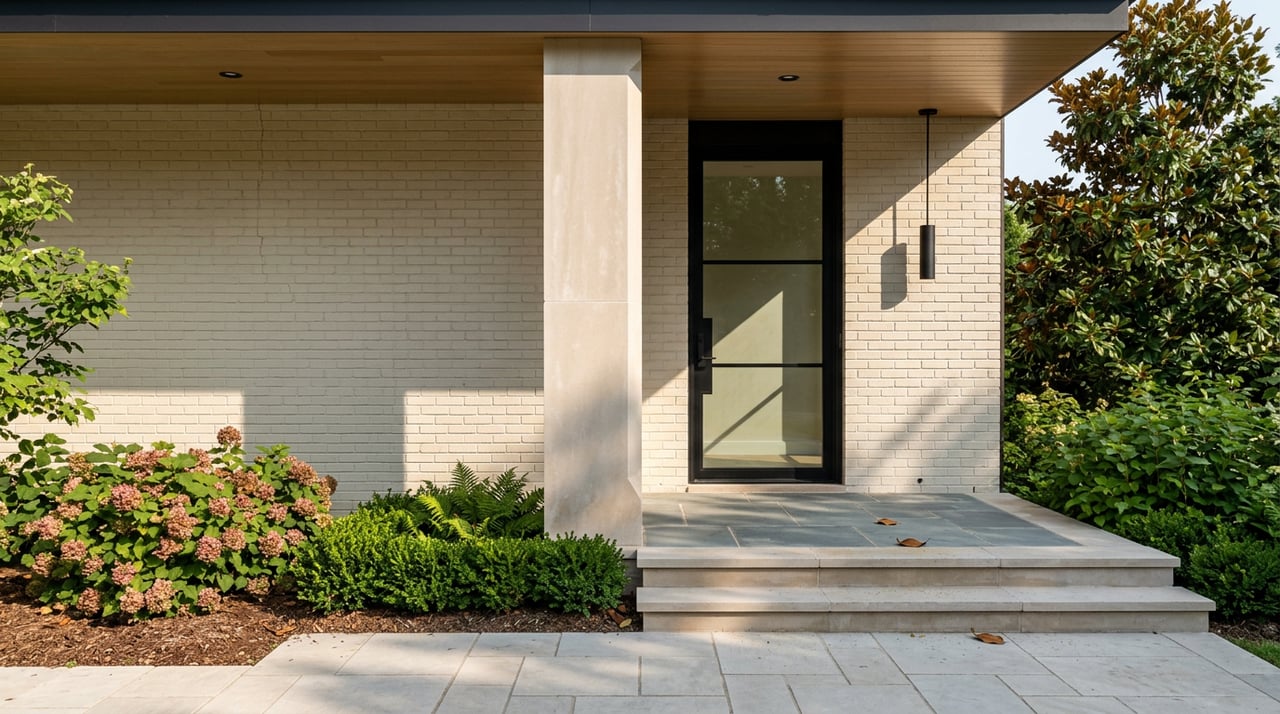
The Franklin median sale price has been sitting near a million dollars for most of 2026, and every portal reports it as if that number describes a single market. It does not. It describes the average outcome of seven different high school attendance zones, a master-planned village that trades at a 45 percent premium to the city as a whole, and a resale segment that quietly slid into buyer's-market territory this summer while the headlines still read "hot."
If you are relocating into Williamson County from Los Angeles or anywhere else, the median is the least useful number in the report. What matters is which mix you are actually buying into, and where the transaction frictions live once you get to the closing table.
The median is a mix effect, not a market
Two credible reads of Franklin from July 2026 disagree by design. Grant Hammond's closed-data pull put the trailing six-month single-family median at $949,995 across 978 closings at $345 per square foot, with about 8.1 months of supply and a 99.1 percent sale-to-list ratio as of mid-July. Zillow's home value index for Franklin, updated May 31, 2026, sat at $915,404, up 1.4 percent year over year.
The reason Franklin's median stays elevated is not scarcity. It is supply, and it runs the other direction from most buyers' assumptions. Williamson County is still delivering new construction at a scale the built-out Davidson submarkets cannot match, and that new inventory is larger, newer, and priced accordingly. Strip out the new-build mix and the comparable resale numbers move meaningfully lower.
Franklin trades at roughly twice the Davidson County median because Williamson keeps delivering new-construction supply at a scale Green Hills and the rest of the built-out core structurally cannot.
That is the mechanism. It also explains why the "seller's market" framing on the listing portals sits next to a trailing sale-to-list ratio under 100 percent and roughly eight months of standing supply. Resale sellers are increasingly negotiating against new-construction concessions, not against each other.
What per-square-foot actually buys across the WCS zones
Grant Hammond's July analysis grouped 3,387 single-family closings by Williamson County Schools high school zone over the trailing 24 months. The spread is wider than most relocators expect, and it does not track any ranking of the schools themselves. It tracks home size, age, and how much of each zone is new construction.
| WCS High School Zone | Median $/sq ft | Median Sale Price | Note |
|---|---|---|---|
| Centennial | $306 | $762,450 | Smallest median home footprint (2,624 sq ft) |
| Independence | $432 | $1,275,605 | Highest-volume premium zone |
| Fairview | $462 | ~$700K range | Thin sample (31 closings), rural/acreage skew |
| Franklin overall | $342 | $1,050,000 | 3,387 closings, trailing 24 months |
Read Centennial and Independence side by side. The dollar-per-square-foot gap of $126 is not a school-quality premium. It is what happens when one zone's inventory skews toward smaller, older resale product and the other zone's inventory skews toward larger new-construction estates. If you are shopping a 3,000-square-foot home, the same $1.05M buys measurably more square footage in Centennial and measurably less in Independence, and both are legitimate Franklin addresses.
The relocator's mistake is comparing list prices across zones and assuming the difference is desirability. The correct comparison is per-square-foot inside a matched product type, on a matched build year, at a matched proximity to amenities. Ask for the comp filter, not the neighborhood average.
The Westhaven premium, priced honestly
The most-searched neighborhood in Franklin is a market of its own. Rolling twelve-month RealTracs data through May 2026 shows 313 closed sales in Westhaven ranging from $648,500 to $5,982,838, with a $1,327,855 median and a $473 per-square-foot median. That is a 45 percent premium over the Zillow city figure and about $130 per square foot above the citywide $/sqft median.
Westhaven was developed by Southern Land Company starting in 2003 as a new-urbanist village on roughly 1,500 acres, planned for 3,500 households at buildout in 2031. Roughly 43 percent of the trailing twelve months of closings were new construction, at a $1,387,345 median, with active builders including SLC Homebuilding, Ford Classic Homes, and Legend Homes. That new-build share is doing the same work inside Westhaven that it does across Franklin as a whole. It is holding the median up.
Here is a reasonable read on what different budgets secured in Westhaven through mid-2026:
- Under $1M: attached product, courtyard cottages, and paired villas at 1,800 to 2,400 sq ft, most often close to the village center
- $1M to $1.5M: the deepest single-family transaction band, where most volume clears
- $1.5M to $2.5M: larger custom single-family with golf or trail adjacency
- $2.5M and up: estate-scale custom on premium lots, with a handful of ultra-premium sales above $5M
The community also contains a separate 55-plus section called the Astor Club, and the residents' amenity is the 15,000-square-foot Westhaven Residents' Club with resort pools, a heated saltwater lap pool, and tennis courts. Nine miles of walking and biking trails connect the village center to most sections. Those amenities are inside the premium, not on top of it.
The frictions relocators lose money on
The listing price is not the last conversation. Three specific frictions catch cross-market buyers off guard in Franklin, and Westhaven concentrates all three.
- The capital transfer fee. Westhaven's HOA covenants include a 0.3 percent capital transfer fee assessed on the final sale price at closing. On a $1.33M median, that is roughly $3,984 the buyer or seller absorbs depending on how the contract is written. It does not appear on the MLS listing and it is not part of standard Tennessee closing costs.
- Tiered HOA dues by section. Westhaven monthly HOA dues run from $107 to $800-plus depending on section and product type, per the neighborhood association's April 2026 schedule. Two homes on the same street can carry meaningfully different carrying costs. Ask for the specific section's dues before you commit to a comp.
- The supply narrative gap. As of mid-July 2026, Franklin single-family was carrying about 8.1 months of supply at a 99.1 percent sale-to-list ratio. That is buyer's-market territory on both measures. Sellers priced to the peak-2022 anchor are the ones extending days-on-market, and resale buyers negotiating against a fresh new-construction quote have more room than the "hot market" framing suggests. Orchard's April 2026 read on the last thirty days showed 21.5 percent of listings dropped in price and only 14 percent closed above list. The pricing power sits with the buyer who reads the whole comp set.
Cross-market relocators from Southern California often price Franklin against Los Angeles carrying costs and conclude the deal is easy. It can be. What breaks the math is assuming the median describes a comparable good. It does not.
How to read a Franklin comp without getting fooled
Filter first, average second. A defensible Franklin comp set narrows by product type (attached, detached, estate), build year (pre-2010 resale versus post-2020 new), high school zone, and proximity to a walkable center. Only then do you look at price per square foot.
Then look at days on market inside that filtered set. In Westhaven alone, roughly 35 percent of homes close in six days or fewer at or above list, while 41 percent sit past thirty days. That bimodal split is the tell that pricing accuracy, not location, is doing most of the work. The same pattern repeats across Franklin at large. A well-priced home in the right filter moves quickly at close to list. Anything else drifts.
The takeaway for a relocator: the neighborhood is not the comp. The comp is the comp.
A short FAQ
Is Franklin still growing faster than Nashville proper? On volume, yes. Franklin recorded roughly 978 single-family closings in the trailing six months through mid-July 2026. Redfin's migration read for early 2026 showed Los Angeles homebuyers searched to move into Franklin more than any other origin metro. Whether that pace holds depends on how aggressively new-construction concessions extend into the fall.
Does the school zone actually change what I pay? It changes what you get for what you pay. The $306 to $462 per-square-foot range across the seven WCS high school zones reflects the mix of housing inside each zone, not a school-quality premium. Two homes at the same price in different zones will differ measurably in square footage, age, and lot.
Is Westhaven worth the premium over other Franklin subdivisions? For buyers who value walkability, amenity depth, and design consistency, the premium is priced honestly. For buyers who want acreage, privacy, or a lower carrying cost, the same dollars buy more elsewhere in 37064 and 37069. The community's design guidelines and Southern Land's ongoing enforcement do preserve resale character in a way most Franklin subdivisions cannot claim.
Relocating into Franklin from a very different market is a translation problem before it is a search problem. If you would like the comp set filtered against your specific product type, zone, and budget, High Style Homes works both sides of the Los Angeles-to-Nashville move and can price the frictions before you write an offer. Schedule a Consultation.