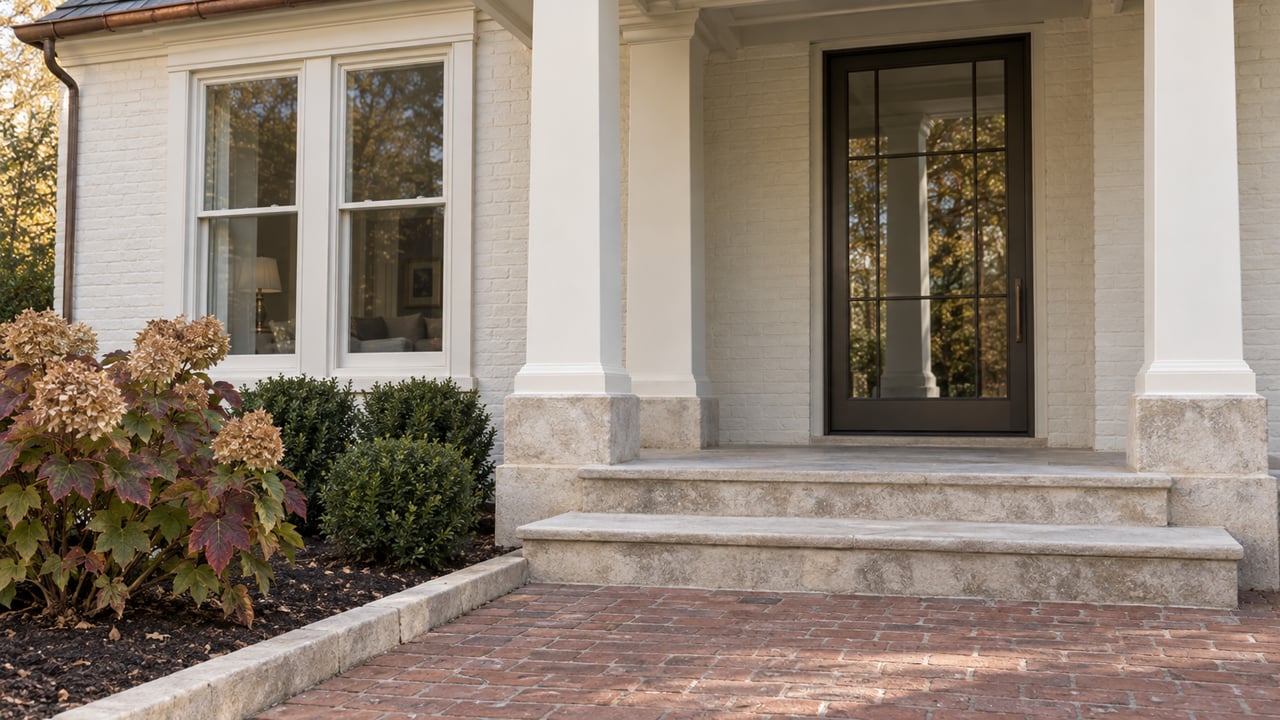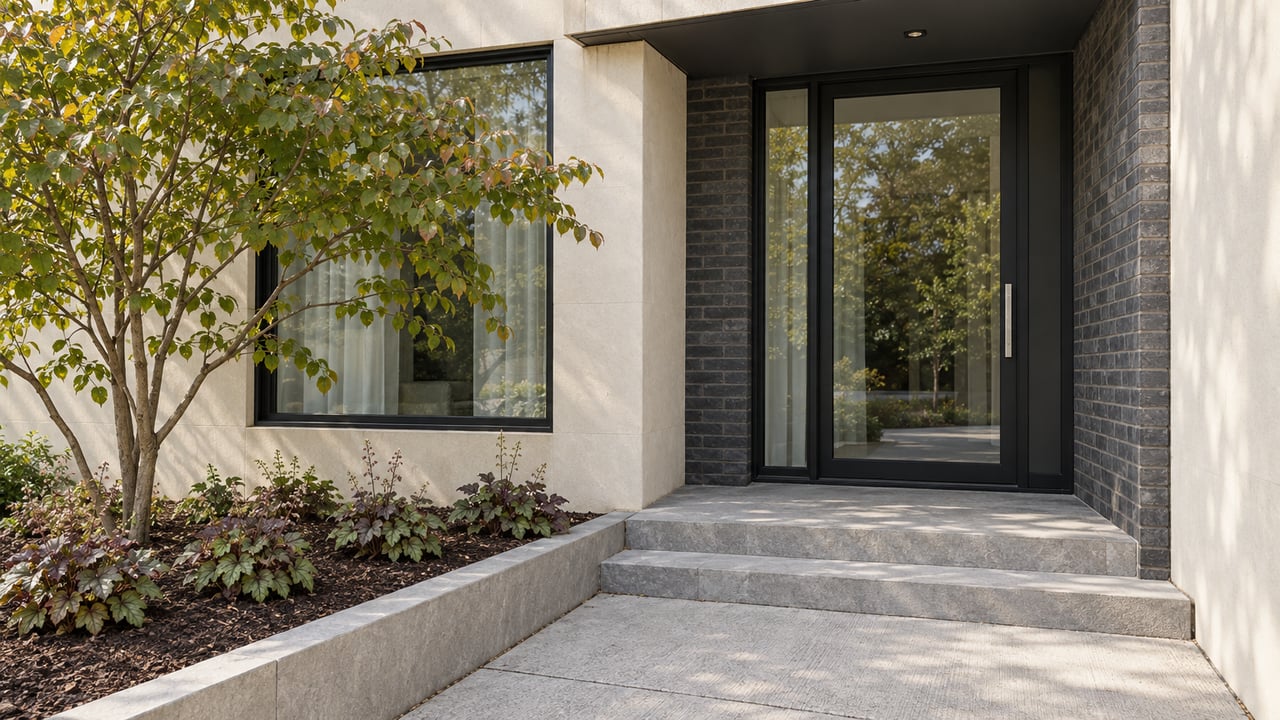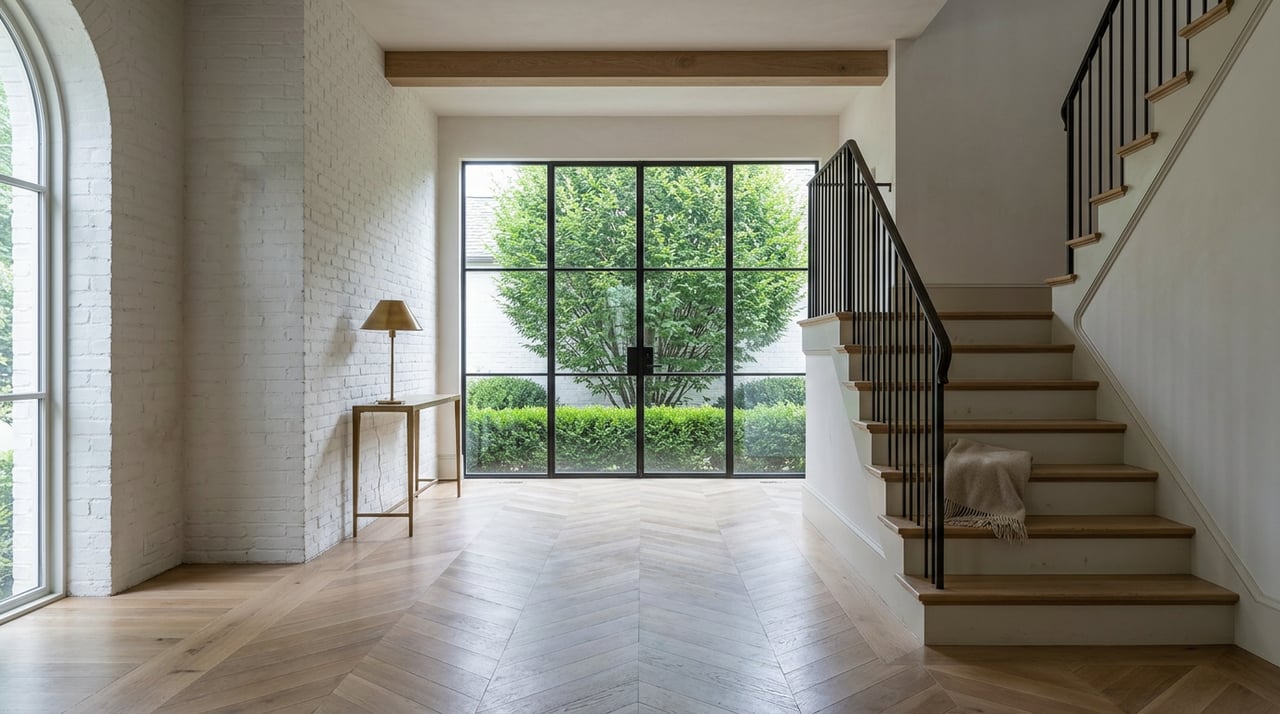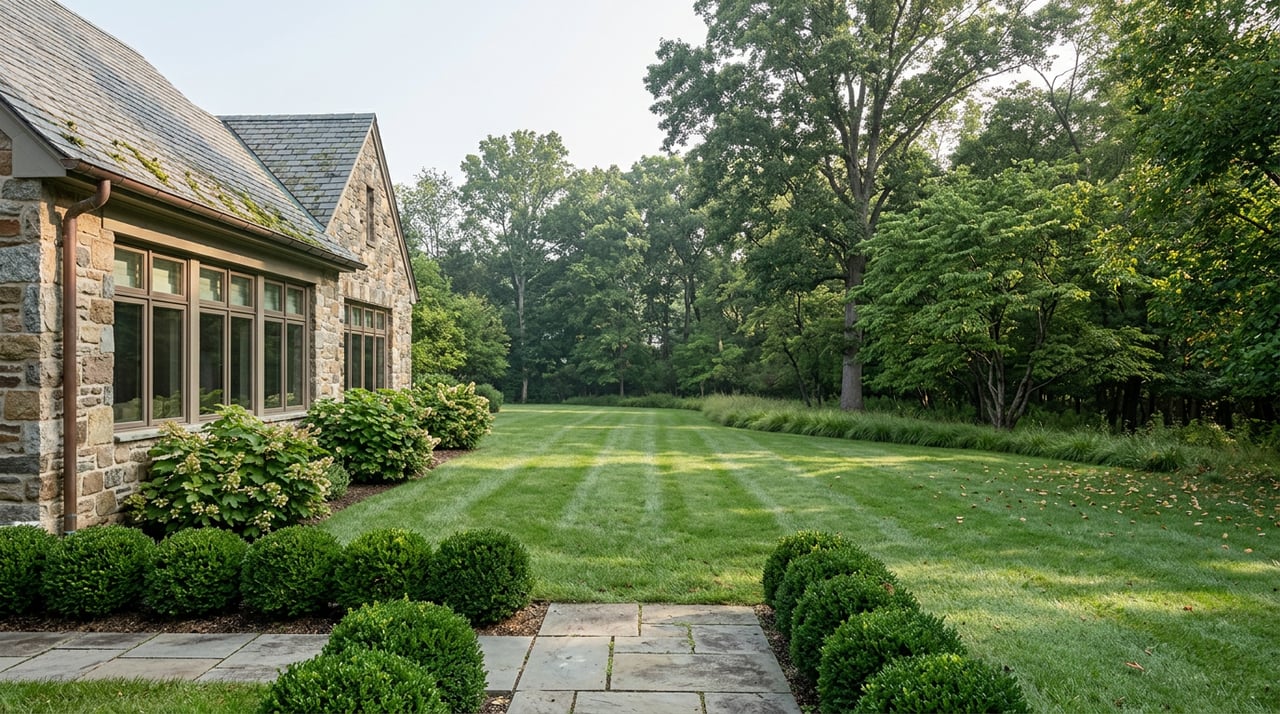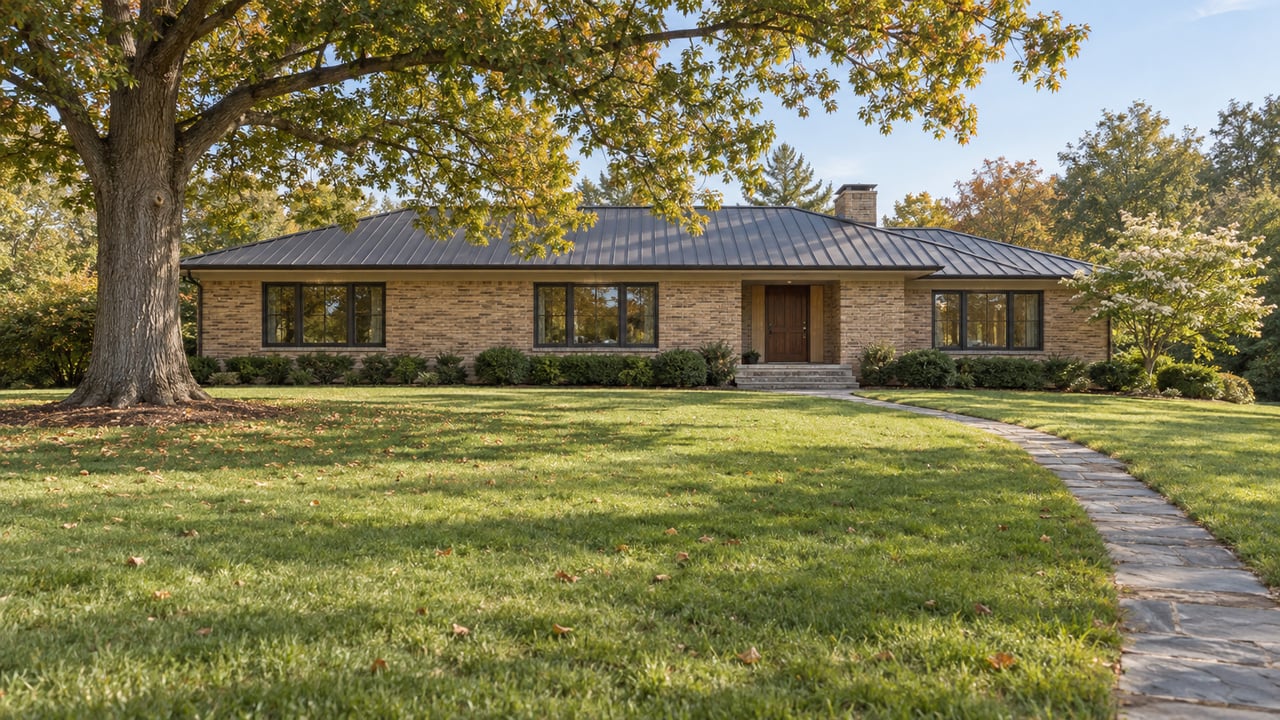
Drive down almost any street between Harding Pike and Highway 100 and the same pairing shows up again and again. A low brick ranch from the 1960s sits on one side of a driveway, its carport still original, its yard shaded by trees planted before the interstate went in. A few doors down, a five-bedroom custom build with a metal roof and a plunge pool sits on a lot that measures out to almost exactly the same size. Same zoning. Same acre, give or take. Very different houses.
That pairing is not a coincidence of taste. It is what happens when a zoning code holds one variable fixed for seventy years while everything else about a house is allowed to change completely.
The floor nobody thinks about until they hit it
Most of West Meade sits inside a Metro Nashville zoning district called RS40. According to the West Meade Neighborhood Association, RS40 requires a minimum lot size of 40,000 square feet, which works out to roughly 0.92 acres. The West Meade Neighborhood Association, which maintains the neighborhood's own boundary and history pages, confirms that most parcels here run from about half an acre to well over three, with the typical homesite sitting just past the one-acre mark.
That floor is the reason a buyer cannot look at a big, wooded West Meade lot and assume it splits into two or three smaller ones. Base RS40 parcels face limits on subdivision, and Metro's own rezoning process, laid out on Nashville.gov, typically takes three to six months when there are no complications. A property owner has to file the application, coordinate it across multiple Metro departments, and get it through Planning Commission review.
That single rule is why West Meade's lot sizes have stayed remarkably stable across seven decades of otherwise dramatic redevelopment. Builders have torn down dozens of the original ranches and replaced them with much larger houses. What they have not done, in any meaningful volume, is turn one acre into three quarter-acre lots.
Nashville rewrote its zoning code. West Meade wasn't on the list.
That stability now sits inside a moving target. In December 2025, Metro Council passed the most significant rezoning package Nashville has seen in a generation. BL2025-1005 created two new zoning districts, Residential Neighborhood and Residential Limited, that allow duplexes, triplexes, quadplexes, and courtyard apartments in places that previously permitted only single-family homes. A companion bill, BL2025-1007, expanded where detached accessory dwelling units, the small backyard cottages sometimes called DADUs, can be built without going through a special overlay process.
Metro Councilmember Jennifer Gamble, one of the bill's sponsors, told WPLN News that "these new housing types are smaller footprint, require less land" and were designed to let starter households buy in without needing a full lot to themselves. The council passed the residential districts bill 28 to 10, with an amendment pushing the effective date back so Metro Planning could update its Community Character Manual first, and passed the DADU expansion 29 to 8.
Here is the part that matters for West Meade specifically. Neither bill applies itself anywhere. The new districts exist as options on a shelf. The most visible example of how that actually plays out is The Nations, where the district councilmember sponsored a custom overlay covering a large share of the neighborhood, and the rezoning moved through under what Nashville's council calls councilmanic courtesy, the practice of deferring to the local member's judgment on rezonings inside their own district.
No comparable petition has moved through Metro Council for West Meade. The base RS40 floor stays in place. The neighborhood's defining feature, an acre-plus lot ten minutes from downtown, isn't disappearing because of policy. It's staying exactly where the underlying zoning code has always put it, even while the citywide conversation about density moves fast in other directions.
What a fixed lot size does to price per square foot
Hold lot size constant for seventy years and let structure quality run free, and the price data starts to separate into two distinct clusters instead of one smooth curve. That is exactly what the closed sales record for West Meade shows over the trailing twelve months. Original homes built before 1980, mostly the brick ranches from the neighborhood's first generation, have been closing at roughly $377 per square foot. Homes built in 2020 or later, the custom estates replacing those ranches on the same size parcels, have been closing between $571 and $608 per square foot. That gap, on comparable land, runs close to $2.3 million between the low end of an original home and the high end of new construction.
That split explains something that trips up a lot of out-of-town buyers when they start pulling numbers from different real estate portals. As of mid-May 2026, one site's average asking price across active West Meade listings ran above $2.6 million. Over the three months ending in May 2026, another site's median closed price for the same neighborhood landed under $1 million. A third source tracking just the West Meade Farms subsection, a much smaller sample, showed a median for the three months ending in March 2026 up more than 200 percent year over year, on a stretch where only ten homes closed. None of those numbers are wrong. They are measuring different slices of a market that genuinely contains two different products on nearly identical lots, and a handful of closings either way can swing a median dramatically when the underlying price-per-square-foot gap is this wide.
For a seller holding an original ranch, that gap cuts both ways. It means a meaningful share of the property's value sits in the land, not the structure, and pricing it purely off comparable sales of similarly aged homes misses half the picture. It also explains why overpricing an original home as though it carries redevelopment upside is a common and expensive mistake in this neighborhood. Sellers who list too high relative to their home's actual condition and structure age have needed price cuts averaging well over $140,000 to find a buyer over the past year, according to the closed sales record.
Reading a West Meade lot before you write an offer
For a buyer weighing a West Meade purchase, the practical checklist looks different from what works in a neighborhood built on smaller, denser lots.
- Confirm the parcel's actual zoning and any overlay in Metro's Parcel Viewer before assuming anything about future use. RS40 is the default, but pockets of the neighborhood carry RS20, RS15, or RS10 depending on street and plat history, and those carry different bulk rules.
- If a subdivision or a second structure is part of the plan, budget the full three to six month rezone timeline, plus the possibility that the request never clears Planning Commission.
- Treat tree preservation seriously if a teardown is on the table. Metro's Urban Forestry office enforces protection and replanting requirements that can affect site planning and construction timelines on wooded lots.
- Price original homes against original comparables and new construction against new construction separately, not against a blended neighborhood median that hides which product you are actually buying.
- Budget on the longer end for a ground-up build. A full path from demo permit through site work, plan review, and final inspection commonly runs twelve to twenty-four months depending on complexity and utility work.
The geography behind the numbers
Part of what keeps demand steady on both sides of that price split is where West Meade actually sits. The neighborhood runs along the edge of the Percy Warner and Edwin Warner Parks system, and school assignments split cleanly within it. The closed sales record shows a majority of addresses zoned to Gower Elementary feeding H.G. Hill Middle, with a smaller share zoned to Westmeade Elementary feeding Bellevue Middle, and the large majority of the neighborhood zoned to James Lawson High School, Nashville's newest campus on the city's west side. That geography, combined with the neighborhood's zoning floor, is a large part of why builders keep finding buyers for both the renovated original and the ground-up new build on the same street.
None of this makes a West Meade lot a bad buy. It makes the lot a specific kind of asset, one where the land and the structure need to be valued as two separate things, and where the biggest financial mistake is assuming the size of the parcel gives you options the zoning code was built specifically to prevent.
If you are weighing a purchase or a sale in West Meade and want a clear read on where a specific address falls on that original-versus-new divide, High Style Homes can walk through the comps that actually apply to your property. Schedule a consultation to start.
This article is general information, not legal, tax or financial advice. Consult a qualified professional about your situation.