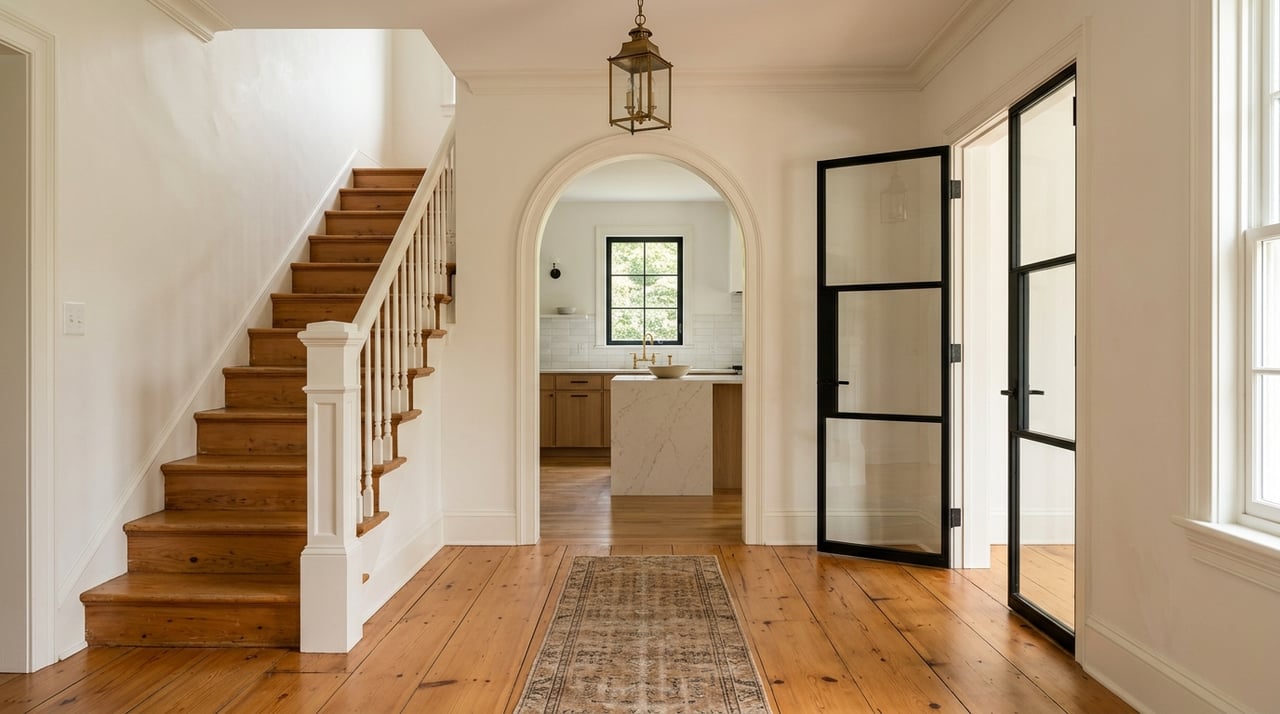
If you are torn between a charming older home near Downtown Franklin and a newer home in a planned community, you are not alone. This choice is about more than style because it affects your budget, maintenance, renovation flexibility, and daily routine. When you understand how Franklin handles historic homes and how newer neighborhoods are designed, you can make a decision that fits both your lifestyle and your long-term plans. Let’s dive in.
Why this choice matters in Franklin
Franklin offers two very different ownership experiences. On one side, you have historic homes tied closely to the city’s older streetscapes and downtown setting. On the other, you have newer neighborhoods shaped by Franklin’s growth plan, with connected streets, sidewalks, trails, and coordinated design.
That difference is not accidental. The City of Franklin’s preservation framework regulates many properties in local historic districts, while the city’s general plan encourages major master-planned growth along the I-65 corridor and in mixed-use areas. In practical terms, that means the home you choose may come with a very different set of expectations from day one.
Historic homes in Franklin
Historic homes in Franklin often attract buyers who value architectural character, established surroundings, and a stronger connection to Downtown Franklin. The city identifies historic resources that include Main Street and neighborhoods from the late 19th century through the early-to-mid-20th century. If you want a home with details and a setting that feel rooted in Franklin’s past, this option can be very appealing.
The tradeoff is that historic ownership can be more regulated. Franklin states that local historic districts are adopted by ordinance and enforced through city design guidelines. That means a home in a locally designated historic district may have rules that affect exterior changes in ways a newer home usually would not.
Local district rules matter
One of the biggest things to confirm is whether a property is in a local historic district or is only listed in a National Register district. Franklin makes an important distinction here. National Register listing alone does not restrict private property use, but local district designation does.
That difference can shape your renovation plans. The city’s guidelines say contributing historic properties face a higher standard of review, with attention to factors such as placement, orientation, setbacks, lot size, height, massing, and scale. If you are thinking about an addition, visible exterior material changes, or porch and window work, you will likely need more planning before moving forward.
Maintenance is part of the equation
Older homes often require more active upkeep. Census Bureau data found that new owners of older homes spent a median of $3,900 per year on maintenance, compared with about $1,500 for longtime owners. Common projects included plumbing fixtures, flooring or drywall, water heaters, windows and doors, roofs, and porches.
That does not mean a historic home is the wrong choice. It means you should buy with a maintenance plan, not just a purchase budget. If you love character, make sure you also have room for repairs, updates, and the occasional surprise that can come with an older structure.
Layout and feel may be different
Historic homes can live differently from newer construction. Census data show older homes tend to be smaller on average, and many have more segmented room layouts. By contrast, newer homes are much more likely to feature open or partially open kitchen and living spaces.
For some buyers, that older layout is part of the charm. For others, it can feel less flexible for everyday living or entertaining. The key is to think carefully about how you actually use space, not just what looks good in photos.
Lead screening deserves attention
If the home was built before 1978, lead-based paint is an important consideration. EPA guidance says homes built before 1978 are more likely to contain lead-based paint, and renovations can create lead dust. EPA and HUD also require lead-based paint disclosure for most homes built before 1978.
This does not mean you should avoid older homes. It means you should ask thoughtful questions, review available disclosures, and plan carefully if repairs or renovations are likely.
Newer homes in Franklin
Newer homes in Franklin appeal to buyers who want more predictable maintenance, modern layouts, and neighborhoods designed with coordinated infrastructure. Franklin’s planning documents show that the city has a long history of master-planned neighborhoods and mixed-use development, especially along the I-65 corridor. These areas often offer a different ownership experience from older downtown-adjacent housing.
For many buyers, newer construction feels easier to step into. You may get a more current floor plan, newer major systems, and a neighborhood built with sidewalks, trails, or shared amenities in mind. That combination can be especially attractive if you want convenience and a more straightforward first few years of ownership.
Planned communities shape daily life
Franklin’s general plan highlights neighborhoods such as Westhaven for their compact form, mix of land uses, pedestrian-oriented design, and distinctive architecture. It also notes planned neighborhoods such as Fieldstone Farms with connections to sidewalks, trails, and a commercial node. These features can influence how you move through your day and how much you rely on your car for nearby errands or recreation.
That said, not every newer neighborhood feels the same. Some offer a stronger mixed-use environment, while others focus more on residential living and shared amenities. It helps to compare not just the house itself, but the surrounding layout and how it supports your routine.
Newer systems can lower short-term surprises
A home’s age can tell you a lot about likely maintenance needs. Fannie Mae notes that age can help buyers anticipate future expenses such as roof or HVAC replacement, and that routine maintenance is usually less expensive than fixing damage caused by delay. For buyers who value predictability, newer homes often reduce the chance of major repair needs in the near term.
This can make a real difference in your monthly comfort level. If you want to focus on settling in instead of coordinating repairs right away, newer construction may align better with your goals.
Modern layouts remain a strong draw
Even as new homes have gotten smaller on average, buyers still tend to favor open or partially open main living areas. NAHB reports that the average new-home size in 2023 was 2,411 square feet, the smallest average in 13 years, and that buyers are looking for homes around 2,070 square feet. In other words, many buyers want efficient space, but they still want that space to feel open and usable.
If your priority is flow between the kitchen, dining, and living areas, newer homes often deliver that more naturally. This is one reason some buyers choose newer construction even when they love Franklin’s historic charm.
HOA costs should be part of your budget
The tradeoff with some newer homes is carrying cost. Fannie Mae notes that condos and townhouses may have HOA fees in addition to the mortgage, and buyers should verify dues, rules, and what the fee covers. In master-planned neighborhoods, those fees may support amenities or shared maintenance, but they still need to fit your monthly budget.
That means the best value is not always the lowest list price. A home with lower maintenance needs but higher monthly dues may still be the better fit for your lifestyle, or it may not. The numbers need to be reviewed together.
How to compare total ownership cost
In Franklin, list price is only one piece of the picture. Tennessee assesses residential property at 25% of appraised value, and the City of Franklin says its FY26 city property tax rate is $0.296 per $100 of assessed value. The city also notes that property taxes are billed and collected by the Williamson County Trustee.
When you compare a historic home and a newer home, it helps to look at total monthly cost instead of focusing on the purchase price alone. That bigger picture usually gives you a better answer.
Compare these costs side by side
- Mortgage payment
- Property taxes
- Insurance
- Expected maintenance and repairs
- HOA dues, if any
- Planned renovation or update costs
A historic home may come with lower dues but higher upkeep. A newer home may offer lower short-term repair risk but higher recurring community costs. The right answer depends on which cost structure fits your finances and your comfort level.
A simple decision framework
If you are still deciding, start with the way you want to live. Franklin’s historic homes often make the most sense for buyers who value walkability, architectural character, and a downtown-adjacent setting. Newer homes often make the most sense for buyers who want modern layouts, newer systems, and neighborhoods planned around connected streets and amenities.
Neither option is automatically better. The stronger choice is the one that matches your priorities without stretching your budget or creating a maintenance burden you do not want.
Historic homes may fit you if you want
- Character and older architecture
- Established streetscapes
- Proximity to Downtown Franklin
- A home with a more distinct historic feel
- The patience and budget for upkeep and review processes
Newer homes may fit you if you want
- Open or more modern layouts
- Newer roofs, HVAC, plumbing, and finishes
- More predictable near-term maintenance
- Sidewalks, trails, or shared amenities
- A neighborhood shaped by coordinated planning
What to confirm before you make an offer
Before you move forward on any Franklin home, it helps to verify a few details early. These items often reveal the real difference between a historic-home purchase and a newer-home purchase.
Key questions to ask
- Is the property in a local historic district or only a National Register district?
- Will a Certificate of Appropriateness be needed for planned exterior work?
- What is the age and condition of the roof, HVAC, and plumbing?
- Does the home have any lead-related disclosures or concerns?
- Are there HOA dues, and what do they cover?
- What do taxes, insurance, and expected upkeep look like together?
A clear answer to those questions can help you avoid buying based on emotion alone. In a market like Franklin, smart decisions come from understanding both the home and the rules that come with it.
Choosing between historic and newer homes in Franklin is really a choice between two lifestyles. One offers character, heritage, and a close connection to older parts of the city. The other often offers convenience, modern flow, and a more predictable ownership experience. If you want a calm, strategic conversation about which fit makes the most sense for your goals, Carla Patterson can help you evaluate the details with clarity.
FAQs
What is the difference between a local historic district and a National Register district in Franklin?
- In Franklin, National Register listing alone does not restrict private property use, but a local historic district is adopted by ordinance and enforced through city design guidelines.
What should buyers know about remodeling a historic home in Franklin?
- Buyers should confirm whether the property is in a local historic district and whether a Certificate of Appropriateness is required for exterior work such as additions, visible material changes, or porch and window updates.
What maintenance costs should buyers expect with older homes in Franklin?
- Census Bureau data found that new owners of older homes spent a median of $3,900 per year on upkeep, with common projects including plumbing fixtures, flooring or drywall, windows and doors, roofs, porches, and water heaters.
Why do newer Franklin homes often feel different from historic homes?
- Newer Franklin homes are commonly shaped by master-planned development and are more likely to offer open living areas, newer systems, and neighborhoods with connected streets, sidewalks, trails, and amenities.
How should buyers compare historic and newer homes in Franklin financially?
- Buyers should compare total monthly cost, including mortgage, property taxes, insurance, expected maintenance, HOA dues if any, and likely renovation expenses.