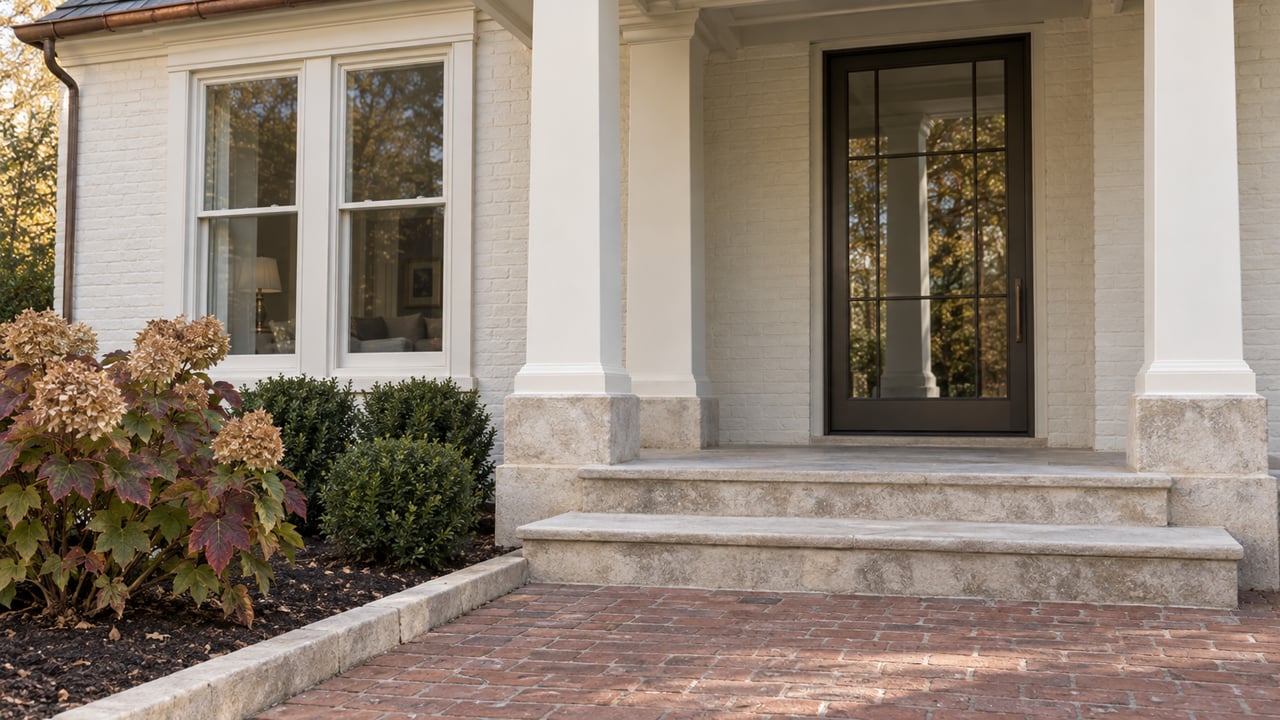
A client comparing Los Angeles to Nashville usually starts with the same assumption: Tennessee has no state income tax, its property tax rates look lower on paper, so the tax bill will be the easy part of the move. Then a reappraisal year lands, and a next-door neighbor who bought the same year, in the same style of house, opens a notice showing an assessed value that jumped by nearly half. Nothing about the house changed. The neighborhood didn't get a new light rail stop or a rezoning. The number just moved, for everyone on the street, at the same time.
That single fact is the whole story. It is not about which state's rate is higher. It is about whose number moves, and when.
California anchors the number to you
Under Proposition 13, a home's assessed value is tied to what the buyer paid for it. The Los Angeles County Assessor's office explains it plainly: the general levy is capped at 1 percent of assessed value, and that assessed value can rise no more than 2 percent a year unless the property sells or undergoes new construction. Buy a home in 2015, and your assessed value in 2026 sits well below what an identical house down the street would be assessed at if it sold last month.
That gap is not a rounding error. Countywide data on Los Angeles assessments shows a blended effective rate near 0.75 percent once long-tenure owners are averaged in, against roughly 1.21 percent for a household that just closed. Two identical homes, same block, same square footage, can carry tax bills that differ by thousands of dollars a year, purely because of when each owner signed. Academic research on the effect, published through the National Bureau of Economic Research, found the arrangement measurably extends how long Californians stay in their homes. People stay put in part because moving means giving up their locked-in number and taking on someone else's.
For a Los Angeles owner, the tax bill is personal. It is anchored to a transaction they signed.
Nashville anchors the number to the county
Davidson County works from the opposite direction. Under Tennessee's mass appraisal system, an individual sale does not reset that property's assessed value. Instead, the county's Assessor of Property periodically revalues every parcel at once, using recent comparable sales across the area to build a shared valuation model. Between those cycles, the Assessor's own FAQ confirms, a property's appraised value typically does not change at all, regardless of who bought it or for how much, unless the physical property is altered or an owner successfully appeals.
That cycle came due in 2025. The countywide reappraisal pushed the median assessed value up by roughly 45 percent in a single revaluation, reflecting four years of price appreciation absorbed all at once rather than smoothed year by year. Tennessee law requires the tax rate to reset downward after a reappraisal so the county doesn't collect a windfall purely from rising values, a rule the Assessor's office calls revenue-neutral. But revenue-neutral only covers the value side of the equation. In 2026, Metro's own accounting showed the Mayor and Council layered rate increases on top of that reset, contributing 26 percent more revenue in the Urban Services District and 39 percent more in the General Services District, according to a public clarification the Assessor's office issued after a business coalition raised concerns. Two separate decisions, made by two separate bodies, both landed on the same bill in the same year.
The scale of the reaction tells you how unfamiliar that felt to homeowners. More than 19,000 property owners filed informal reviews during the 2025 reappraisal cycle, and nearly 15,000 pushed on to a formal hearing before the independent Metropolitan Board of Equalization, a volume the Assessor's office described as unprecedented. Of those who saw it through, roughly half won some reduction, contributing to more than $54 million in reduced assessed value across the county, according to reporting from WKRN.
The cycle is about to get shorter, not calmer
Metro Council has already voted to shrink the gap between reappraisals from four years to three, a change state officials approved and one that Council Budget and Finance Chair Delishia Porterfield tied directly to the shock homeowners felt in 2025. In a statement to NewsChannel5, she put the reasoning this way:
"For fast-growing cities like Nashville, a four-year reappraisal cycle is too long to get the data that's needed."
The intent is to make each jump smaller by taking it more often. It does not change the underlying mechanism. Values will still hold flat, then move all at once for the whole county, just on a tighter clock. Davidson County's next countywide reappraisal is set for 2028, per the Assessor's own FAQ page.
What this looks like across the three counties
The same mass appraisal mechanism runs across Middle Tennessee, but the rate and calendar shift by county line, which matters if a relocation search is comparing a Nashville-proper address against a home in Franklin or Brentwood.
| Davidson County (Nashville) | Williamson County (Franklin, Brentwood) | Los Angeles County | |
|---|---|---|---|
| What sets assessed value | Countywide mass appraisal model | Countywide mass appraisal model | Individual purchase price |
| When value resets | Only at reappraisal cycle | Only at reappraisal cycle | At sale or new construction |
| Current cycle length | Moving from 4 years to 3 | Continuous, capped at 2%/year | |
| Most recent reappraisal | 2025 | 2025 | Ongoing, per-transaction |
| Approximate headline rate | Just under $2.80 per $100 assessed | Roughly $1.73 per $100 assessed | 1% base plus local bonds |
The Williamson County rate runs noticeably lower than Davidson's, which is part of why Franklin and Brentwood carry a reputation for softening higher purchase prices with a lighter annual bill. But the mechanism inside Williamson County is identical to Davidson's. A buyer choosing between a Nashville-proper listing and a Franklin one isn't choosing between predictable and unpredictable. Both counties move in the same lumpy, cyclical way. The real difference is the rate multiplier and the calendar, not the underlying risk shape.
The 2026 appeal window already closed, and that's useful information
Davidson County's Assessor of Property says the informal review period for the 2026 assessment year closed on April 17, and the Assessor's formal appeal notice says the window before the Board of Equalization closed on June 26. Neither is open now. What the appeal data from earlier this year does show is that the assessed value, unlike the tax rate, is genuinely contestable. Owners who brought recent comparable sales, documentation of property condition, or evidence of incorrect square footage to a hearing had real success. The rate decision made by the Mayor and Council is not something any individual homeowner can appeal. For anyone relocating into a home that will face its first Davidson County reappraisal in 2028, that distinction, value versus rate, is the one worth remembering well before the notice arrives.
A short FAQ
Will my Nashville tax bill go up every year the way home values rise? Not in small annual steps. Between reappraisal cycles, a property's assessed value in Davidson County typically stays flat regardless of what nearby homes sell for. The number moves only when the county completes its next countywide reappraisal, currently scheduled for 2028, or when the Council separately adjusts the tax rate.
Does buying a home in Nashville reset its assessed value to my purchase price, the way it would in California? No. A sale alone does not trigger a new assessment in Davidson County. The assessed value comes from the county's shared mass appraisal model and updates for everyone at the next cycle, not for an individual buyer at closing.
What is California's supplemental tax bill after closing? According to sum.money, California issues a one-time supplemental bill when a sale changes a property's assessed value mid-year.
Comparing a California tax bill to a Tennessee one by rate alone misses the part that actually shapes the experience of owning the home. One system asks what you paid. The other asks what the county decided the whole area is worth, on its own schedule. Sorting out how that difference plays into a specific move, and a specific address in Nashville, Franklin, or Brentwood, is exactly the kind of cross-market groundwork High Style Homes does before a client ever writes an offer.
Schedule a Consultation
This article is general information, not legal, tax or financial advice. Consult a qualified professional about your situation.